It took half a century to bring this story to an English speaking audience
Some stories take longer than others to mature. In this case, 80 years from the acts it describes, and more than 50 years since first contact.

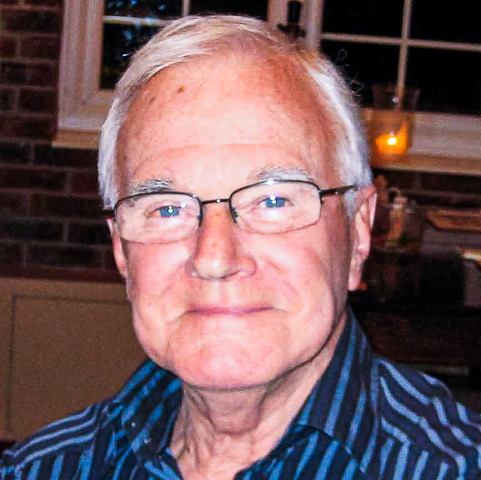
Mike Jempson was teaching in a Brighton language school in 1969 when he got to know Alice Mavian, a young French woman who was polishing up her English. They became family friends. Mike stayed with Alice and her husband in Paris. Alice became godmother to Mike’s son. During subsequent visits he met her Armenian-French parents, Beatrice and Mihran, who owned a small shoe shop. Mihran poured him Armenian brandy.
Mike knew little about Alice’s parents. He was not aware that Mavian had fled from Armenia to Syria as a teenager during the genocide of 1915 (up to 1.5 million Armenians exterminated during World War I), or that he had had to bury his mother in the sand in Syria. He didn’t know Mavian well enough to see the number 186060 tattooed on his left arm, a legacy of the first of three Nazi camps.
But Mavian had written a detailed account. He wrote of his time as a Communist Party cobbler before the war who kept getting sacked for arguing with the boss. He described how, during the German occupation, he helped organise Armenians as part of the Manouchian group in the French resistance. He wrote about his arrest in 1944 and his time in the Nazi death camps where he tried to build support networks of Armenian and Russian prisoners. His personal account was published in Armenian in the Soviet Union in 1976 and later in Russian. When Mihran Mavian died Alice translated and published (2010) a French version, Par-delà les ténèbres, (Beyond the Darkness).
He has a right to know more about us
After her mother died in 2012 Alice passed her mother’s copy “to my brother Mike, part of our family who has the right to know more about us…”. Mike learnt about the Armenian genocide and about what had happened to Mavian, before and after the war. (As a pro Soviet Communist Party member Mavian was sent into ‘internal exile’ out of Paris in the 1950s and later was expelled from the French Communist Party because he refused to criticise the Soviet invasion of Czechoslovakia.)
With Alice’s blessing Mike began to translate her French version into English, a labour of love picked up and put down between paid work over many years. Some accounts of the brutality were hard to digest, and he adds bluntly: “My French was not that good.”
He joined a writer’s retreat in Istria (Croatia) to complete the translation, broken by long walks and games of scrabble. Then, when three chapters vanished from his laptop the translation had to be done again.
Before Alice died in late 2024 she approved much of the text which gave Mike the go-ahead to complete the task. “She was translating the book to honour her father and I felt I was translating the book to honour both him and her,” he says.
The day to day battle for survival
Mavian details the day to day battle for survival; how people foraged for what they could find and shared what little they had. The death rate from brutality, cold, exhaustion and murder was huge and survival depended on luck and comradeship. Sent to carry rocks in the freezing cold from the quarry in Flossenbürg, where life span was measured in days, he was transferred to the shoe repair workshop because shoes are needed even in a death camp. In the final march from the camp as the Nazis fled, those who could not keep up were killed on the spot. Mavian survived just. On liberation he weighed 40 kilos.
Mike says: “I had this dreadful feeling when I was translating, because you knew that if he made a friend they were probably going to die.” Mike visited camps at Flossenbürg and Compiegne to visualise what he was translating. He saw the pictures of prisoners queueing with their pathetic little tins waiting to be fed, and felt uncomfortably close to the horrors about which he was reading.
Providing some context
Realising that an English-speaking audience might know little of the background, Mike added 229 explanatory notes to the book. “I was thinking who am I translating this for? What will somebody 80 years on know about this. So I began researching everything.”
It was a struggle to find a publisher. Eventually Mike came across the Gomidas Institute in London dedicated to Armenian studies where the executive director Ara Sarafian published the book this year (2026).
Mike, 79, has a distinguished career. He was founder and director of the MediaWise Trust. He was a Senior Lecturer at the University of the West of England and Visiting Professor in Media Ethics at Lincoln University. He was the UK lead on a 14-nation study of Media Accountability & Transparency. He has devised and delivered training for journalists and NGOs in more than 40 African, Asian and European countries.
This ‘labour of love’ reflects his lifelong interest in history but is completely different to anything else he has done. “Obviously this was really, really important for me as a personal project, and I had felt bad that I hadn’t finished it and now I am very glad that I did,” he says.
There are more Mavian notebooks yet to be translated. But they will have to wait. Mike is currently working on something closer to home. A history of Fishponds.